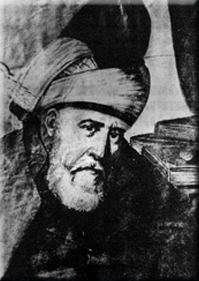
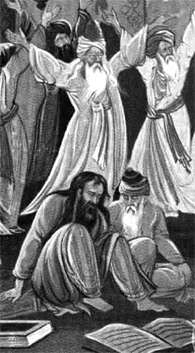
1.
Preface
Rumi
was a messenger of truth with a high clarity of vision. The only way
we can truly honor him is to be as truthful and clear about his life
as possible. To cover up or sweep certain parts of his history under
a "fine Persian rug" is a crime against the respect and admiration
we have for him. Rumi deserves only the truth.
In
Rumi's Untold Story, my mission is to honor Rumi by providing a clear
record of the highlights of his life and clarifying aspects of his history
that have been kept secret from the public until now.
Rumi
is a powerhouse. It is important to understand that his immense global
popularity is due to his status as a totally unique and authentic personality.
Rumi was not a meek, passive poet living in a hut while writing crowd-pleasing
verse to charm the locals. Everything about Rumi was pure magic-an expression
of a powerful, independent spirit shattering the status quo, dated social
norms, primitive cultural taboos, and dusty dogmatic thinking.
As
explained in Segment 7, Rumi took intentional steps to ensure that the
name of his mentor, Shams, was preserved alongside his own. Rumi knew
that as soon as he passed, his family and historians would attempt to
wipe Shams' name from his life story. Following in Rumi's footsteps,
this archive attempts to preserve the whole truth about his provocative
and colorful life.
Rumi
in Today's Pop Culture
Rumi's influence continues to permeate modern culture. From Beyoncé
and Jay-Z naming their daughter "Rumi" in his honor, to musical
tributes by Madonna and Coldplay, his frequency remains undeniable.
Hollywood has even seen interest in his story from Oscar-winning screenwriters,
proving that 800 years later, the "Rumi Phenomenon" is only
growing.
*
* * * * * *
2.
About Rumi
To understand
Rumi's impact, one must first understand the world that shaped him. Born
in 1207 CE in Balkh, Persia (modern-day Afghanistan), Rumi was the son
of a high-ranking noble scholar. His early life was defined by a world
in transition-an era of profound intellectual growth set against a backdrop
of extreme political instability.
The Great
Migration of Premonition
Long before he was a mystic, Rumi was a refugee. His family embarked on
a massive decade-long odyssey across the Middle East to escape the impending
Mongol invasions. This migration was not merely a flight from war; it
was a calculated departure triggered by his father's spiritual premonition
of the coming catastrophe. Furthermore, some historical reports point
to Bahauddin falling out of favor with the king as another driving reason
for uprooting his entire family and heading West. Traveling through Baghdad,
Mecca, and Damascus, the young Rumi was exposed to the diverse intellectual
currents of the Silk Road before finally settling in Konya (modern-day
Turkey).
The Aristocratic
Scholar
In Konya, Rumi reached the pinnacle of the establishment. By his late
20s, he had become a "Celebrity Academic"-a master of theology,
jurisprudence, and the sciences. As the "Sober Master" of the
Seljuk elite, he was a pillar of society, surrounded by hundreds of disciples
and granted the highest social status.
The Internal
Revolution
This biographical context is essential because it highlights the magnitude
of the "Collision" that was to come. It is a common misconception
that Rumi "left it all behind" or became a starving ascetic.
In reality, Rumi remained a man of significant social power, residing
in a mansion and maintaining his aristocratic status. However, after meeting
Shams, he put his public life and his role as a "Sober Master"
on hold. He turned his focus entirely inward to navigate the intense spiritual
fire that had been ignited within him. He didn't walk away from the world-he
mastered the art of being in the world while being entirely free from
its psychological chains.
*
* * * * * *
3.
The Growing Phenomenon of Rumi
Rumi is a global
force that transcends time and geography. Eight centuries after his life
in Konya, he remains among the best-selling poets in the West and a dominant
influence in worldwide culture. This enduring popularity is not a passing
trend, but a testament to the timeless frequency of his message.
The Cultural
Footprint
Rumi's influence permeates the highest levels of modern creativity:
Music &
Icons: From Beyoncé and Jay-Z naming their daughter "Rumi,"
to musical tributes by artists like Madonna and Coldplay, his words continue
to inspire some of world's most influential voices.
Film &
Media: Hollywood's top screenwriters and global filmmakers frequently
look to his life as the ultimate narrative of transformation, proving
that the "Rumi Phenomenon" is only expanding.
The Authenticity
Factor
Why does Rumi stay relevant while others fade? It is because he represents
a rare, authentic independent spirit. In a world of digital noise, his
voice offers a clear signal of truth. My 35-year research project is dedicated
to moving past the common, "level 2" clichés to show
the real man behind the global fame-the master who achieved the rare balance
of being socially powerful while remaining spiritually free.
*
* * * * * *
4.
Why Rumi? Here are 12 Reasons
Rumi's popularity
is a global phenomenon because his message functions as a universal bridge.
Here are the 12 core reasons why his voice continues to resonate across
all cultures and boundaries:
1- Universality:
He speaks to the human heart, transcending the limits of organized religion
and nationality.
2- Emotional
Honesty: He addresses the raw reality of human suffering, longing,
and joy without judgment.
3- The Path
of Love: He shifted the focus from cold, fear-based dogma to a "Religion
of Love."
4- Intellectual
Depth: As a master scholar, his work satisfies both the heart and
the analytical mind.
5- Direct
Experience: He encourages the seeker to find truth within themselves
rather than through intermediaries.
6- The Use
of Art: He integrated music, poetry, and dance (Sama) into the spiritual
path, making it vibrant and alive.
7- Inclusivity:
His "Open Door" policy famously welcomed everyone, regardless
of their background or past.
8- Timelessness:
The psychological truths he explored 800 years ago are still relevant
to the modern human condition.
9- Radical
Freedom: He championed the independence of the spirit against the
rigid structures of society.
10- Nature
and Symbolism: He used everyday imagery-the sun, the ocean, the reed
flute-to explain complex spiritual truths.
11- The
Human-Divine Connection: He bridged the gap between the Creator and
the created, suggesting that the "Beloved" is closer than one's
own breath.
12- Authenticity:
His life was his greatest poem; he lived the transformation he preached.
*
* * * * * *
5.
Rumi & Shams:
A Love Story, Tragedy or Personal Necessity?
The
Untold Story
The encounter
between Rumi and the wandering dervish Shams-i Tabrizi is often romanticized,
but the historical reality is a gritty narrative of transformation and
betrayal. It was not just a meeting of minds; it was a Personal Necessity
that ended in a calculated conspiracy.
The Necessary
Collision
Before Shams, Rumi was a "Sober Master" at the peak of the social
hierarchy. Shams was the "Pattern Interrupt" sent to shatter
Rumi's reliance on prestige. This collision was essential-Shams acted
as the mirror Rumi needed to move beyond book-learning and into the "fire"
of direct experience.
The Conspiracy
of Silence
The most haunting aspect of this story is the betrayal within Rumi's own
inner circle. While Rumi was immersed in his spiritual evolution, a plot
was brewing among his disciples and his own family. Jealousy over Rumi's
undivided attention to Shams led to a dark consensus: everyone was in
on the plan against Shams, except Rumi. He was kept in a state of total
innocence, unaware that the very people he trusted were orchestrating
the removal of his mentor.
The Honor
Killing
The "disappearance" of Shams was, in truth, an honor killing.
Driven by social pressure and the desire to "restore" Rumi to
his traditional role, the conspirators-including Rumi's own son, Alaeddin-acted
to eliminate the man they viewed as a disruptive outsider. This was not
a random act of violence, but a systemic attempt to control a spirit they
could not harvest.
The Poem
of Betrayal
The depth of this tragedy is captured in a poignant moment shared in the
original records. A poem was reportedly sent or shared during this time
of tension, serving as a cryptic warning or a reflection of the impending
doom. It underscored the reality that while the town was celebrating Rumi's
fame, they were simultaneously destroying the source of his awakening.
While Rumi
was waiting for any news of Shams he vehemently refused to accept that
he was dead. He wrote about this experience in this quatrain from Divan-e
Shams, which is published on page 104 of my book, Rending The Veil:
Who
says that the immortal one has died?
Who says that the "sun" of hope has died?
Look, it is the enemy of the "sun" who has come to the rooftops,
Closing both eyes shut, crying out, "O, the 'sun' has died."
(The
word shams means the sun and Rumi routinely plays on this word association
throughout his work on the first collection, Divan-e Shams.)
The Aftermath
By keeping Rumi in the dark, the conspirators inadvertently fueled the
very fire they tried to extinguish. The loss of Shams forced Rumi to stop
looking for the "Beloved" in the physical world and find it
within himself, turning his personal tragedy into the global legacy of
poetry we have today.
*
* * * * * *
6.
Who was Kimia Khatun?
Kimia Khatun
is often portrayed in "Level 2" fiction as a romantic figure
or a simple footnote. In the authentic Untold Story, she is a tragic pivot
point-the young woman whose presence and subsequent death accelerated
the violent collision between Rumi's household and Shams.
The Marriage
of Necessity
Kimia, Rumi's stepdaughter, was a young woman raised in Rumi's household.
In an attempt to anchor Shams to Konya and provide him with domestic stability,
a marriage was arranged between the aging, eccentric dervish and the young
Kimia. Far from a standard union, this was a high-stakes social experiment
that placed a delicate young woman in the shadow of a "spiritual
giant" whose intensity few could withstand.
The Catalyst
of Jealousy
Kimia's presence became the flashpoint for the simmering resentment in
the house. Specifically, Rumi's younger son, Alaeddin, was reportedly
infatuated with her. Seeing his "right" to Kimia (they were
not blood related) bypassed in favor of a man he already despised (Shams)
turned a spiritual conflict into a deadly, personal vendetta.
The Death
of Kimia
The historical records are dark and brief regarding her end. Shortly after
the marriage, Kimia fell ill and passed away. While some traditional accounts
blame a sudden illness, the "Untold" perspective looks at the
psychological and physical toll of being caught between the world's greatest
mystic and a household fueled by murderous jealousy.
The Final
Domino
Kimia's death was the final domino to fall. It removed the last thread
of "protection" Shams had in the house. Her passing gave the
conspirators-led by Alaeddin-the opening they needed to strike. She was
the innocent sacrifice in a battle of frequencies that she never asked
to join.
*
* * * * * *
7.
The Collective Poems of Shams or Rumi?
One of the
greatest paradoxes in world literature is that Rumi's most explosive and
lyrical masterpiece-a collection of over 40,000 verses-is titled the Divan-e
Shams-i Tabrizi (the collection of poems of Shams from the City of Tabriz,
in Iran). Why would the most famous poet in history sign his "Life's
Work" with the name of his mentor?
The Unification
of Identity
For a "Level 2" scholar, signing these poems with another's
name is merely a matter of dedication or tribute. From a "Level 4"
perspective, this was a radical act of Harmonization. By the time Rumi
reached the peak of his poetic power, the boundary between his individual
identity and the frequency of Shams had become porous. He wasn't just
writing about Shams; he was writing from the Unified State they both occupied.
The Masterpiece
of the "Drunken" State
While his later work, the Masnavi, is a structured, "sober"
teaching manual, the Divan-e Shams is pure fire. It is the record of Rumi's
spirit operating without the usual social filters.
The Frequency
Shift: These poems were often composed during the Sama (the whirling dance)
in a state of high-vibration ecstasy.
The Shared
Voice: By signing the poems as "Shams," Rumi was acknowledging
that his voice had been upgraded by their collision. He didn't want the
reader to see the "Grand Mufti of Konya"-he wanted them to feel
the raw energy of the "Sun" (Shams) that was now radiating through
his own persona.
A Literary
"Untold Story"
The world calls it "Rumi's Poetry," but Rumi himself refused
to claim it. He attributed his most profound insights to the "Collision"
with Shams. My research into the original Persian manuscripts confirms
that this wasn't just a gesture of humility; it was a literal description
of his internal reality. The poems are the offspring of a union-they belong
to the "Sun" (Shams) that Rumi had become.
Strategic
Move
Rumi named the collection after his mentor to make sure Shams' name will
be remembered alongside himself. Rumi knew well that his students, family
members and historians had little intention to remember this wild, wandering
dervish. They considered Shams a blemish on Rumi's otherwise pristine
reputation. Rumi, as usual, took the matter into his own hands. He not
only named the collection after Shams, but used Shams as the pen name
or signature at the end of hundreds of his poems. He assured that his
successors had no possible alternative but to perpetuate Shams. Even altering
the title of the epic would not have wiped Shams from the history books,
since few hundred poems still enshrined him.
*
* * * * * *
8.
What Really Went On Between Rumi and Shams in those Precious Several Months?
When Rumi and
Shams first met, they retreated into a room for several months, barring
the door to everyone-including Rumi's most senior disciples and family.
This period of total seclusion is the most mysterious chapter of the "Untold
Story." What actually happened behind those closed doors was not
a simple exchange of information, but a Total System Reboot.
Beyond Books
and Words
Rumi was already the most learned man of his time. He didn't need more
"data." Shams's role was to help Rumi unlearn the rigid, academic
structures that were capping his potential.
The Fire-Mirror:
Shams acted as a "living mirror," reflecting Rumi's own hidden
power back to him.
The Silence
of the Master: In those months, the legendary "Grand Mufti"
was forced to be silent. It was a period of intense psychological and
spiritual pressure intended to shift Rumi's frequency from the "head"
to the "heart."
The Laboratory
of Transformation
This was not a social visit; it was a spiritual laboratory. While the
world outside was whispering and growing increasingly jealous, Rumi was
undergoing a metamorphosis.
Recalibration:
They were engaged in a "direct transmission" of energy. Shams
was upgrading Rumi's internal "software" so he could handle
the massive creative fire that would eventually produce the Divan and
the Masnavi.
The Breaking
of Habits: Shams challenged every one of Rumi's comforts and social certainties.
He forced the "Sober Master" to confront the limits of his own
prestige.
The "Level
4" Reality
My research suggests that this was a period of Personal Necessity. Rumi
had reached a plateau that no book could help him cross. He needed a "Shatterer
of Systems" like Shams to break the shell. When the door finally
opened months later, the man who walked out looked like the old Rumi,
but he was operating on a completely different wavelength. He was no longer
a scholar of religion and law; he was a master of the Universe.
Rumi discusses
the true spiritual growth process as being cooked. However, instead of
a slow cooker, Shams put Rumi in a microwave oven. Instead of several
life times, the process of ascension was sped up to a mere several years.
Rumi not only clearly understood this, but he did his absolute best to
make sure no mystic ever forgot what happened between them.
*
* * * * * *
9.
Rumi, Hafez, Omar Khayyam and Global Artistic Perspective
While Rumi
is often the most recognized name today, he is part of a "Trinity"
of Persian masters who together provide a complete map of the human experience.
Understanding the distinction between Rumi, Hafez, and Omar Khayyam is
the key to appreciating the "Untold Story" of Persian mysticism.
The Three
Frequencies
Omar
Khayyam (The Intellectual Skeptic): Khayyam represents the frequency
of the Logician. He looked at the fleeting nature of time and the "Simulation"
of life with a scientific, almost mathematical detachment. His message
was one of "Carpe Diem"-to seize the moment because the future
is unknown. This one quote summons up his work, "All I want is a
loaf of bread, a jug of wine and you."
Hafez
(The Master of the Heart): Hafez is the frequency of The Romantic. His
poetry is a sophisticated dance of irony, love, and social critique. While
Rumi is the "Ocean," Hafez is the "Pearl"-polished,
intricate, and deeply focused on the nuances of the human heart's longing.
Hafez wrote: "When all your desires are distilled; You will cast
just two votes: To love more, And be happy."
Rumi
(The Master of the Spirit): Rumi is the frequency of Transformation. He
doesn't just observe the world like Khayyam or sing of it like Hafez;
he seeks to transcend it. Rumi is the "Fire" that consumes the
old self to forge something new.
The Global
Convergence
Why do these three resonate so strongly in the West? It is because they
offer a "Level 4" perspective that is absent in much of modern
art. They prove that art is not just entertainment; it is a vehicle for
higher consciousness.
Khayyam appeals
to the modern scientist and the skeptic.
Hafez appeals
to the lover and the seeker of beauty.
Rumi appeals
to the revolutionary-those who are ready to put their public life on hold
to find their internal truth.
The Research
Insight
Through 35 years of research, I have found that Rumi's work acts as the
bridge between Khayyam's cold logic and Hafez's emotional warmth. Rumi
takes the "Now" of Khayyam and the "Love" of Hafez
and turns them into a practical methodology for spiritual independence.
Together, they form a global artistic perspective that is un-harvestable
by any single dogma or system.
*
* * * * * *
10.
Rumi, a Pop Star Celebrity at the Time?
To understand
the "Untold Story," one must realize that Rumi was not an obscure
mystic hiding in a cave. In his time, he was a Mega-Celebrity-a high-ranking
academic and spiritual authority who possessed the social equivalent of
"rock star" status in the Seljuk capital of Konya.
The Authority
of the "Sober Master"
Long before the world knew him as a poet, Rumi was the "Grand Mufti."
He was a man of immense wealth and prestige, inheriting his father's position
as the leading scholar of the state.
The Entourage:
When Rumi moved through the streets of Konya, he didn't walk alone. He
was surrounded by hundreds of students, disciples, and high-ranking officials.
The Mansion:
He lived in a grand residence and was a personal advisor to the Sultan
and the ruling elite. His influence was so great that his word could sway
political decisions and social policy.
The Celebrity
Pivot
What makes Rumi's story so compelling is what he did with that fame. Most
people at that level of "Pop Star" celebrity spend their lives
trying to protect their status. Rumi, however, used his platform to introduce
a radical new frequency.
From Lecture
Hall to the Streets: After the collision with Shams, the celebrity scholar
began to whirl in the marketplace and compose poetry in the streets.
The Scandal:
Imagine a top-tier modern intellectual or a high-ranking religious leader
suddenly dancing in public-it was a massive social scandal. His "celebrity"
didn't disappear; it transformed into a controversial, magnetic force
that the establishment could no longer control.
The Un-harvestable
Signal
The reason Rumi remains a "Pop Star" today is that he proved
one can have total social power without being a slave to it. He was a
master of the system who remained "Unchained" from its psychological
traps. My research shows that Rumi's 13th-century celebrity was the foundation
that allowed his message to spread across the Silk Road and eventually
the entire world.
*
* * * * * *
11.
Is Rumi the Inspiration behind Today's Love Songs?
If you look
at the DNA of the modern love song-the themes of unbearable longing, the
"soulmate," and the idea of love as a transformative fire-you
will find the fingerprints of Rumi. He is the "Great Ancestor"
of the modern lyricist, having codified the language of the heart 800
years before the first pop record was ever cut.
The Architect
of Longing
Before Rumi, much of the world's "spiritual" writing was instructional,
dry, or fear-based. Rumi introduced a frequency of Passion. He spoke of
the "Beloved" with an intensity that blurred the lines between
the human and the divine. This "Rumi Template" is exactly what
modern songwriters use when they describe a love that feels like a spiritual
awakening.
From Konya
to the Charts
Rumi's influence on modern music is both direct and indirect:
Direct Influence:
Major icons like Madonna, Coldplay, and Beyoncé have explicitly
used Rumi's words in their work. They aren't just quoting him; they are
attempting to tap into the high-vibration energy he established.
The "Melody
of the Reed": Rumi's opening of the Masnavi-the song of the reed
flute complaining of separation-is the ultimate metaphor for the "breakup
song" or the song of yearning. It is the original "blues."
The Difference
in Frequency
While modern love songs often focus on "Level 2" attachment
and possession, Rumi's "Love Songs" (the Divan-e Shams) operate
at Level 4.
Modern Songs:
"I can't live without you" (Dependency).
Rumi's Frequency:
"I am you, and you are me" (Unification).
The Global
Resonance
The reason a love song written in 1250 CE still feels "current"
in 2026 is that Rumi tapped into a universal human frequency. My research
shows that Rumi didn't just write for his time; he wrote for the human
condition. He provided the "Musical Score" for the soul's desire
to return to its source, a theme that remains the most powerful force
in global art and music today.
*
* * * * * *
12.
Was Rumi a Sufi?
The short answer
is no.
In the modern
world, Rumi is often categorized as a "Sufi." However, to the
serious seeker, this label is far too small. Rumi did not operate within
the narrow confines of a specific sect; he operated within the thousands-of-years-old
Persian Mystical Tradition.
The Ancient
Current
Rumi was the heir to a profound lineage of Persian wisdom that predates
modern religious structures. This tradition-rooted in the heart of Central
Asia and Greater Khorasan-focused on the direct, unmediated connection
between the human spirit and the Divine. While he used the language and
symbols of his time, he was drawing from a "Level 4" reservoir
of ancient knowledge that has always existed outside of organized "isms."
The Religion
of Love
Rumi's path was not about joining an order; it was about the Unification
of the Soul. He famously declared his path to be the "Religion of
Love," a frequency that bypasses the rituals and dogmas of any single
organization.
Beyond the
Labels: He wrote, "I am not from the East, nor from the West... my
place is placeless." This wasn't just poetry; it was a statement
of his Independent Spirit.
The Master of the System: Rumi used the social structures of 13th-century
Konya as a vehicle, but he was never contained by them. He was a force
of nature that utilized the ancient Persian "Mugh" (or magi,
plural of magus, meaning "wise men," "priests," or
"astrologers", the source of modern day "magic" and
"magician") frequency to awaken those around him.
The Post-Rumi
Institutionalization
It is important to note that the "Mevlevi Order" (the Whirling
Dervishes) was a formal institution created by his followers and family
after his death. Rumi himself remained an unchained traveler of the spirit.
He wasn't interested in building a "Sufi" organization; he was
interested in a Total Human Metamorphosis.
The Research
Insight
My research into the original Persian texts reveals that calling Rumi
a "Sufi" is like calling the ocean a "lake." He represents
the culmination of a vast, ancient Persian wisdom-stream that teaches
the individual how to remain spiritually free and un-harvestable by the
systems of the world.
*
* * * * * *
13.
Rumi for All Seasons
Rumi has survived
800 years of shifting empires, industrial revolutions, and the digital
age without losing a shred of his relevance. He is truly a "Master
for All Seasons" because he does not address the temporary circumstances
of the world-he addresses the permanent architecture of the human soul.
The Universal
Frequency
Rumi's work functions like a spiritual "Swiss Army Knife." He
provides the specific frequency needed for every season of a human life:
The Season
of Grief: He teaches us that the "wound is the place where the Light
enters," turning loss into a catalyst for growth.
The Season
of Success: He warns against the "Level 2" traps of fame and
prestige, reminding the successful to remain unchained from their own
status.
The Season
of Confusion: His "Untold Story" provides a map for those lost
in the "Simulation," offering a way back to the authentic self.
A Bridge
Between Eras
Rumi is the rare thinker who appeals equally to the medieval scholar and
the 21st-century tech executive. Why? Because he mastered the thousands-of-years-old
Persian Mystical Tradition which views time as a circle rather than a
line.
The Timeless
Voice: His poetry doesn't feel "old" because it speaks to the
Independent Spirit-a part of us that is outside of time.
The Global
Anchor: In an era of rapid change and digital noise, Rumi acts as an anchor,
returning the seeker to a state of radical presence.
The Research
Insight
My research shows that Rumi's "All Seasons" appeal is the result
of his incredible range. He is at once a philosopher, a jurist, a musician,
and a revolutionary. He didn't just write for the "pious"; he
wrote for the "broken," the "drunken," and the "rebellious."
By covering the entire spectrum of human emotion, he ensured that no matter
what "season" humanity is walking through, his voice would be
there to guide the way.
*
* * * * * *
14.
Rumi was Gloriously Blasphemous
In the "Level
2" version of history, Rumi is presented as a polite, religious poet.
But the authentic Rumi was a spiritual revolutionary whose actions and
words were often seen as Gloriously Blasphemous by the religious establishment
of his time. He didn't just break the rules; he transcended the entire
game.
The Rebellion
Against Dogma
Rumi's "blasphemy" was actually a radical commitment to Truth.
He saw that the religious authorities had turned the "thousands-of-years-old
Persian Mystical Tradition" into a set of hollow rituals designed
for social control.
The Heart vs.
The Mosque: He famously suggested that the true temple was the human heart,
not a building. To the establishment, placing the individual's direct
experience above the institution was the ultimate heresy.
The "Drunken"
Mystic: By whirling in the streets, embracing music, and associating with
the "outcasts" of society, Rumi shattered the image of the "Sober
Master." He was a high-ranking cleric who deliberately chose the
path of "divine madness."
A High-Frequency
Transgression
Rumi's work is filled with imagery that shocked his contemporaries-using
wine, intoxication, and forbidden love as metaphors for the Divine union.
Beyond Right
and Wrong: His famous line, "beyond wrongdoing and rightdoing, there
is a field. I'll meet you there," is a manifesto of spiritual independence.
He was inviting the seeker to a place where the "Level 2" labels
of "believer" and "infidel" no longer exist.
The Un-harvestable
Spirit: His "blasphemy" was a protective shield. By appearing
scandalous to the narrow-minded, he ensured that his message would only
be understood by those operating at a higher frequency.
The Research
Insight
My research shows that Rumi wasn't being "rebellious" for the
sake of it. He was a master of the system who knew exactly which boundaries
to break to wake people up. His "blasphemy" was a Pattern Interrupt
intended to pull humanity out of the trance of blind obedience and return
them to a state of radical, independent love.
I have several
examples of Rumi's blasphemous poems in the "Rumi Poetry" section
of this website. You can view here: http://rumi.net/rumi_poems_main.htm
.
Two
such poems are below.
(1)
I have lost myself in God, and now God is mine.
Don't look for Him in every direction, for He is in my soul.
I am the Sultan. I would be lying.
If I said that there is someone who is my sultan.
(2)
This is you, making me drunk in a monastery.
Turning me into an idol worshiper while I am seated at Kaaba.
I have no control in this game of good and bad.
*
* * * * * *
15.
Rumi Belongs to the Whole World and Cannot Be Marginalized
One of the
greatest mistakes made by modern "Level 2" commentators is the
attempt to "nationalize" or "marginalize" Rumi. Whether
it is claiming him exclusively for one country, one language, or one specific
religion, these attempts fail because Rumi's essence is universal. He
is a global citizen of the spirit who belongs to anyone with a heart.
The Failure
of Ownership
Governments and institutions often try to use Rumi as a cultural "brand."
However, Rumi's work acts as a Pattern Interrupt to these systems.
Beyond Borders:
He was born in Central Asia (Balkh), matured in the heart of the Persian
cultural world, and spent his final years in the West (Anatolia). He is
the bridge between the East and the West.
Beyond "Isms":
While he used the tools of the thousands-of-years-old Persian Mystical
Tradition, he used them to dismantle the walls that separate humanity.
He cannot be marginalized into a "Muslim poet" or a "New
Age guru" because he occupies a space that is vastly superior to
both.
The Un-harvestable
Frequency
The reason Rumi remains among the best-selling poets in America and a
pillar of wisdom in the East is that he speaks to the Independent Spirit.
The Shared
Heritage: He represents the "Golden Thread" of human consciousness.
When a person in New York, Tokyo, or Germany reads Rumi, they aren't reading
"foreign" literature-they are reading a map of their own internal
landscape.
Resistance
to Control: Any system that tries to box Rumi in-whether for political
gain or religious dogma-finds that his message slips through their fingers.
You cannot cage the sun.
The Research
Insight
My research reveals that Rumi's "globalism" was intentional.
He was a master of the system who chose to write in Persian-the "lingua
franca" of the Silk Road-specifically so his message could travel
across continents. He knew that the truth he was sharing was a Personal
Necessity for all of humanity, not just a local audience. He is the ultimate
proof that the deeper you go into your own culture and soul, the more
you belong to the entire world.
Don't even
try to drag Rumi down to your level. Instead see if you can rise to his.
His famous
line of "come, come whoever you are" is as precious as "all
men are created equal" and "liberty and justice for all."
Rumi is a giant
on our planet; in fact he is unfathomable. My love and admiration for
him has no bounds. The best way we can honor and show respect to him is
not to pigeonhole him into any one region or religion just to make some
contemporary political case but showcase him as an example of how high
we can rise. Rumi is untouchable by mere mortals, stop attempting to marginalize
him.
*
* * * * * *
16.
The Famed Whirling Dervishes of Turkey do not Represent Rumi, they Epitomize
his Son
When people
think of Rumi today, they immediately envision the synchronized, white-robed
"Whirling Dervishes" of Turkey. However, the authentic "Untold
Story" reveals a stark reality: the formalized ceremony known as
the Sama does not represent the spontaneous ecstasy of Rumi; it epitomizes
the institutional vision of his son, Sultan Walad.
The Spontaneous
vs. The Scheduled
For Rumi, the "whirling" was not a rehearsed performance. It
was a Pattern Interrupt-a spontaneous eruption of joy and necessity.
Rumi's Whirl:
Rumi would begin to turn anywhere-in the marketplace, at a goldsmith's
shop, or in the middle of a street. There was no uniform, no choreography,
and no audience. It was a raw, "Level 4" connection to the Divine
frequency.
The Son's Institution:
Sultan Walad was a master of the system. He recognized that his father's
"divine madness" was impossible to sustain for the masses. To
preserve his father's legacy, he organized the chaos into a structured
"Order" (the Mevlevi). He turned the spontaneous fire into a
candle that could be carried.
The Epitome
of Sultan Walad
The Whirling Dervishes we see today are the result of Sultan Walad's genius
for organization, not Rumi's wild spirit.
The Uniformity:
The robes, the hats, and the specific musical sequences were formalized
to create a "Level 2" religious tradition.
The Ritualization
of Ecstasy: By turning the whirl into a predictable ceremony, the institution
made it safe for the public. They took the "Unchained" energy
of Rumi and placed it within a beautiful, controlled frame.
The "Untold"
Distinction
It is vital to understand that while Sultan Walad saved his father's name
from being forgotten, he inadvertently created a mask.
Rumi was the
Source-unpredictable, gloriously blasphemous, and free.
Sultan Walad
was the Builder-disciplined, protective, and institutional.
The Research
Insight
My research into the original Persian records shows that Rumi never intended
to start a "Whirling Dervish" show. He was practicing a technology
of the soul from the thousands-of-years-old Persian Mystical Tradition.
While we can appreciate the beauty of the Turkish Mevlevi ceremony, we
must realize it is a tribute to Rumi, not a reflection of him. To find
the real Rumi, you have to look past the choreographed dance and find
the man who whirled in the mud of the marketplace out of pure, unadulterated
love.
*
* * * * * *
17.
Why the Academia Will Never Come Close to Understanding Rumi and Other
Mystic Poets and Writers
There is a
fundamental "Frequency Gap" between the modern academic world
and the mystical masters like Rumi. While universities are excellent at
cataloging dates, linguistic structures, and historical footnotes, they
are systematically designed to miss the Essence. To understand Rumi, one
must move beyond "studying" and into "becoming."
The Trap
of "Level 2" Analysis
Academia operates on the frequency of the Logician. It treats Rumi's poetry
like a cadaver to be dissected rather than a living fire to be experienced.
Knowledge vs.
Being: An academic can memorize verses of Rumi and still be spiritually
stagnant. They focus on the container (the Persian grammar, the social
context) while ignoring the content (the transformative energy).
The Fear of
the Irrational: Academia is built on the "Simulation" of logic.
Because Rumi's "Gloriously Blasphemous" and "Drunken"
states cannot be measured or peer-reviewed, the academic world often dismisses
them as mere "poetic metaphor" rather than a literal biological
and spiritual reality.
The "Persian
Mystical Tradition" is Not a Subject
The thousands-of-years-old Persian Mystical Tradition was never meant
to be a university course. It was a Personal Necessity-a survival guide
for the soul.
The Requirement
of Experience: In the ancient tradition, you didn't "read" about
the Truth; you underwent a "System Reboot" under the guidance
of a Master.
The Outsider
Perspective: Most Western and modern Middle Eastern academics approach
Rumi as outsiders looking through a window. They lack the "Software"
to interpret the signals he is sending because they have not participated
in the "Collision" that Rumi describes.
The Failure
of the Translation
Academia often prioritizes "literal" translation, which strips
the life out of the work. They translate the words but miss the Rhythm
and Frequency. This is why many academic versions of Rumi feel dry and
religious, while the "Untold Story" feels like a revolution.
The Research
Insight
My research has shown that Rumi didn't just write for the "Scholars";
he also wrote for the Independent Spirit. He intentionally hid his deepest
secrets in plain sight, knowing that the "Academic Mind" would
be too distracted by the labels and the grammar to see the door. To truly
understand Rumi, you have to be willing to leave the safety of the "Sober"
classroom and enter the fire of the "Drunken" experience.
*
* * * * * *
18.
The 11 Eerie Similarities Between Rasputin and Rumi’s Mentor, Shams
In my expanded
and vastly enhanced second book on Rumi’s untold biography, Rumi
Unchained: The Forbidden Biography, I dive into an unusual, almost impossible
set of similarities between the lives of Grigori Rasputin and Rumi’s
enigmatic mentor, Shams Tabrizi.
Although they
lived 650 years apart and operated in completely different cultural worlds,
the dynamic between Shams and Rumi strikingly mirrors the infamous relationship
between Rasputin and the Russian Tsarina Alexandra Feodorovna.
Here are 11
eerie parallels that connect these two historical disruptors:
1. The Disruptive
“Outsider”
Like Rasputin, Shams was a volatile outsider who managed to gain total,
absolute influence over the most powerful figure in the region.
2. Threat
from the Inside
For both men, the true danger did not come from the general public. Instead,
the threat emerged from internal factions, family members and students
who felt their master’s reputation was being burned to the ground
by this mesmerizing newcomer.
3. Rogue
Spiritualism
Both Rasputin and Shams were rogue spiritualists. They operated entirely
outside the confines of the established priestly and religious systems
of their respective eras.
4. Mystical
Prowess
Both figures possessed undeniable spiritual powers. However, historical
accounts and reputations point to Shams possessing a much higher, more
profound level of spiritual mastery.
5. Social
Anomalies
Neither man fit into the standard social order. They were professional
outsiders, existing on the fringes of polite society until they suddenly
moved to its very center.
6. Infiltrating
the Seats of Power
Both men miraculously made their way into the single most powerful households
of their respective times and regions.
7. Accessing
the Inner Sanctums
Rasputin famously embedded himself into the imperial court of Russia and
the household of the Empress Alexandra. Similarly, Shams integrated himself
into the house of Rumi — who was effectively the number-one resident
in the region, so revered that even the ruling Emir was his student and
addressed him as “Master.”
8. Instant
Animosity
Upon their arrival, both men were instantly and intensely despised by
the existing inner circles.
9. Absolute
Control
Despite the jealousy surrounding them, both mystics were granted total,
uninterrupted control over their elite protégés.
10. A Shared
Vice
Interestingly, both men were known to be serious, heavy drinkers, defying
the traditional expectations of the holy men of their times.
11. Tragic,
Insular Assassinations
Ultimately, both lives were violently cut short by the very inner circles
that envied them. Rasputin was assassinated by a group of Tsarist courtiers.
Shams was murdered in an “honor killing” orchestrated by Rumi’s
own youngest son and three of his close friends.
A Final
Thought: I am not necessarily suggesting that Rasputin was the literal
reincarnation of Shams. However, I am deeply amazed by how the final years
of their respective lives could parallel one another in almost an exact,
haunting match.
Rumi Unchained
— The Forbidden Biography: Essential Chapters of Rumi’s Untold
Story from 35 Years of Research — On Amazon in 4 Formats
https://www.amazon.com/dp/B0GGLVZ7T
*
* * * * * *
19.
Rumi's Untold Story - Conclusion
The journey
through the life of Rumi is not a study of the past; it is a map for the
future. The "Untold Story" reveals that Rumi was never meant
to be a statue in a museum or a quote on a greeting card. He was-and remains-a
Shatterer of Systems, a master who used the thousands-of-years-old Persian
Mystical Tradition to provide a way out of the human "Simulation."
The Final
Synthesis
From the "Sober Master" to the "Drunken Poet," Rumi's
life was a series of necessary collisions.
The Collision
with Shams was the death of the scholar and the birth of the revolutionary.
The Conspiracy
of Silence and the tragic "Honor Killing" of Shams were the
fires that forged his message into something indestructible.
The Unification
of Identity (signing as Shams) proved that a human can move beyond the
limits of a single persona.
The Purpose
of the Research
My research into the original Persian manuscripts was not conducted to
satisfy academic curiosity. It was a Personal Necessity to rescue Rumi
from the "Level 2" distortions of the establishment. Whether
it is the institutionalized "Dervish" shows or the dry analysis
of the universities, the world has tried to "harvest" Rumi and
make him safe. The Untold Story restores his edge-his "Glorious Blasphemy"
and his radical independence.
The Living
Frequency
The conclusion of Rumi's story is not found in his death in 1273 CE, but
in the Unchained Spirit of anyone who reads his words today and feels
the "Pattern Interrupt."
He taught us
that the ego is a tool to be celebrated.
He showed us
that "Love" is not an emotion, but a high-vibration frequency
of intelligence.
He proved that
the individual is the true temple.
Your Next
Step
Rumi belongs to no one, and therefore he belongs to you. The "Untold
Story" is an invitation to stop being a spectator of his light and
to become a "Sun" yourself. As Rumi's own journey proved, when
you align yourself with the ancient frequency of Truth, you become un-harvestable,
un-marginalized, and truly free.
*
* * * * * *
20.
Personal Gratitude
As a modern
mystic, and after decades of immersion in the "Black Box" of
Rumi's life, this work has ceased to be a project and has become a profound
Personal Gratitude. To walk the path of the "Untold Story" is
to realize that we are never alone in our search for the Independent Spirit.
To the Source
My deepest gratitude goes to the "Sun" himself-Shams. Without
his radical "Pattern Interrupt," Rumi would have remained a
brilliant but "Sober" scholar lost to the archives of history.
Shams provided the fire that allows us to see the Truth 800 years later.
To the Bridge
I am eternally grateful to Rumi, not just for his words, but for his courage.
He was a man who had everything-wealth, fame, and power-and was willing
to risk it all for a higher frequency. His life is the ultimate proof
that the "Simulation" can be broken.
To the Ancient
Tradition
I owe a massive debt to the thousands-of-years-old Persian Mystical Tradition
and the Ancient Mystical Schools. These lineages of "Unchained"
wisdom provided the tools and the language for this research. There are
traditions that have survived empires and erasures, proving that the frequency
of Truth is indestructible.
To the Seekers
Finally, my gratitude extends to you-the reader and the seeker. By engaging
with the "Level 4" reality of this work, you are helping to
keep the signal alive. You are the reason this research was conducted.
Your desire to move beyond the "Level 2" fairytales and into
the grit of the Untold Story is what gives this work its purpose.
The Gift
of the Work
The greatest reward of these years has been the realization that Rumi's
message is a living, breathing Personal Necessity. It has been my honor
to serve as a translator of this frequency, stripping away the institutional
masks to reveal the revolutionary heart of the Master.
-- Valentino
St. Germain (Shahram Shiva)
*
* * * * * *
21.
The 4 Levels of Soul Evolution
To navigate
the Untold Story of Rumi, one must understand the frequency from which
he speaks. While the world is mostly trapped in the first two, Rumi's
life was a radical journey from Level 2 to Level 4.
Level 1:
The Animal (The Survival Frequency)
At this level, the individual (who soul is newly incarnated from the animal
world) is a prisoner of the external world. Life happens to them. They
are governed by fear, reactive emotions, and the basic needs of the "Simulation."
There is no awareness of the Independent Spirit, only the struggle to
survive within the system. This is regardless of "wealth" or
"success."
Level 2:
The Slave (Religion and the Social Frequency)
This is where most of the world resides. Here, the soul seeks meaning
through institutions, dogmas, and social status. It is the realm of organized
religion and academic study, but ultimately a gilded cage that Rumi had
to shatter.
Level 3:
The Seeker (The Spa Spirituality or the Awakening Frequency)
At Level 3, the "Pattern Interrupt" occurs. The individual realizes
the "Simulation" is hollow and begins to search for the Source.
However, Level 3 is just another soul trap as it replaces one god for
another and traps the seeker into another pattern of submission. This
level is where the new destination is not yet reached.
Level 4:
The Architect (The Beyond or the Mastery Frequency)
This is the state of Harmonization that Rumi reached after the collision
with Shams. At Level 4, the individual operates as a "Sun."
There is no longer a gap between the Self and the Divine frequency. You
are no longer "searching" for Truth; you are an expression of
it. This is the realm where the spirit is un-harvestable, gloriously free,
and truly independent. This is the state of soul-freedom and ascension.
By identifying
these levels, we can see that the "Conspiracy" against Shams
was a Level 2 reaction to a Level 4 reality. This website and my research
are designed to provide the tools for those ready to make the leap from
the "Sober" world of Level 2 into the "Fire" of Level
4.
*
* * * * * *
22.
References
1. The Life and Work
of Jalal-ud-Din Rumi
By: Afzal Iqbal - ISBN-10: 9839541854
2. Rumi's World:
The Life and Works of the Greatest Sufi Poet
By: Annemarie Schimmel - ISBN-10: 0877736111
3. Kimia Khatoon
By: Saeideh Ghods - ASIN: B00SCBOII4. In Persian
4. Rumi's Daughter
By: Muriel Maufroy - ISBN-10: 1844135837
5. Selected Poems
from the Divan-e Shams-e Tabrizi: Along With the Original Persian
By: R. A. Nicholson - ISBN-10: 0936347619
6. Kulliyat-e Shams-e
Tabrizi, Tehran, Amir Kabir Press, 12th Edition, 1988. In Persian.
By: Rumi's original work edited by Badiuzzaman Furuzanfar
7. Kulliyat-e Shams-e
Tabrizi, Tehran, University of Tehran, 1st Edition, Vol 8, 1963, In Persian
By: Rumi's original work edited by Badiuzzaman Furuzanfar
8. Rending the Veil:
Literal and Poetic Translations of Rumi
By: Shahram Shiva - ISBN-10: 0934252467
9. Hush, Don't Say
Anything to God: Passionate Poems of Rumi
By: Shahram Shiva - ISBN-10: 0875730841
10. Hundreds of lovers
of Rumi who have contacted Rumi Network from around the world in the past
decades with additional information about Rumi's colorful life and his
unconventional relationship with Shams.
|